01. Climate Law, Policy & Governance
Strengthening the Legal Architecture of Climate Action
Climate action requires legal frameworks that are clear, coherent and capable of evolving with science, technology and economic realities.
Areas include: Climate and environmental law; Regulatory analysis; Policy research; Legislative and regulatory frameworks; Climate governance; Corporate climate responsibilities; Policy consultation; Institutional governance; Regulatory preparedness.
Engage With Our Climate Law & Policy Platform

02. Climate Advisory & Compliance
Navigating an Evolving Regulatory Landscape
As climate-related expectations become increasingly embedded in business and institutional decision-making, organisations require clarity around emerging obligations and transition priorities.
Areas include: Climate regulatory assessment; Sustainability compliance; Net Zero preparedness; Climate governance; Transition planning; Regulatory monitoring; Institutional readiness; Strategic advisory.
Explore Climate Advisory03. Climate Finance & Market Mechanisms
Connecting Climate Ambition With Capital
The transition to a resilient and low-carbon economy requires capital at scale—and the institutions, policies and market mechanisms capable of directing it effectively.
Areas include: Climate finance; Sustainable finance; Carbon markets; Environmental markets; Investment frameworks; Climate-related financial mechanisms; Market readiness; Policy and regulatory dimensions of climate finance.
Explore Climate Finance & Markets
04. EPR & Circular Economy
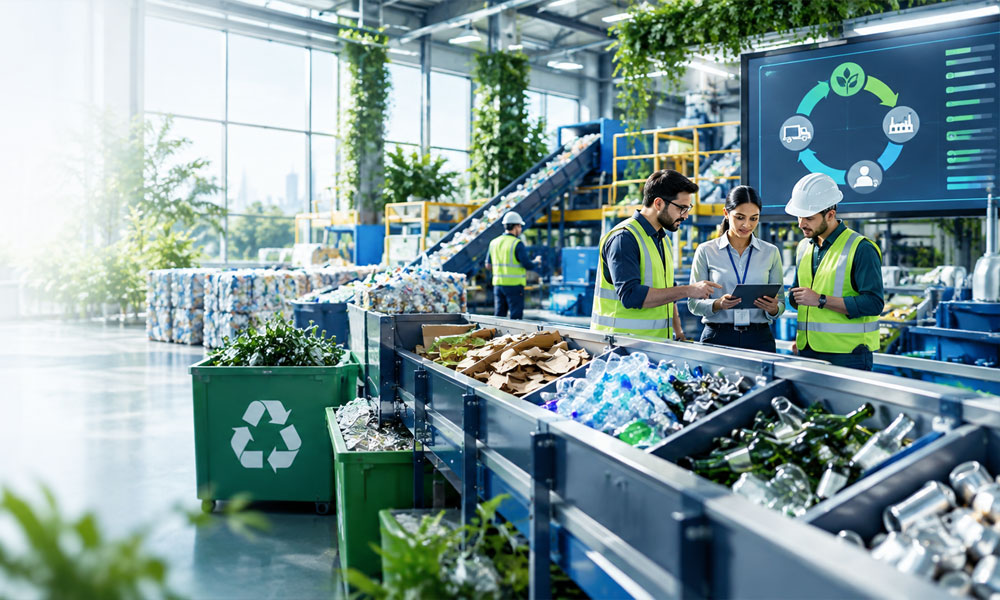
From Responsibility to Circularity
A truly circular economy demands responsibility across the lifecycle of products and resources. CLA supports stakeholders in understanding EPR frameworks, strengthening compliance and exploring the legal, policy and institutional foundations of circularity.
Areas include: Extended Producer Responsibility; Circular economy; Resource efficiency; Waste management frameworks; Producer responsibility; Sustainable supply chains; EPR compliance; Circular business models.
Explore EPR & Circularity05. Green Technology & Infrastructure
Enabling Innovation to Move From Concept to Deployment
Technology will be central to the climate transition—but innovation can achieve scale only where policy, regulation, finance and institutional capacity create an enabling environment.
Areas include: Climate technology; Green infrastructure; Technology transfer; Energy efficiency; Sustainable infrastructure; Innovation ecosystems; Technology-policy interface; Partnerships and knowledge exchange.
Explore Green Technology & Infrastructure

06. Climate Justice, Mediation & Arbitration
Advancing Fair and Effective Climate Governance
Climate-related challenges increasingly raise questions of rights, responsibilities, accountability, resources and competing interests. CLA promotes informed and accessible approaches to climate justice and appropriate mechanisms for dialogue, mediation and dispute resolution.
Areas include: Climate justice; Environmental disputes; Mediation; Arbitration; Stakeholder dialogue; Access to justice; Conflict prevention; Collaborative dispute resolution.
Explore Climate Justice07. Capacity Building & Knowledge Development
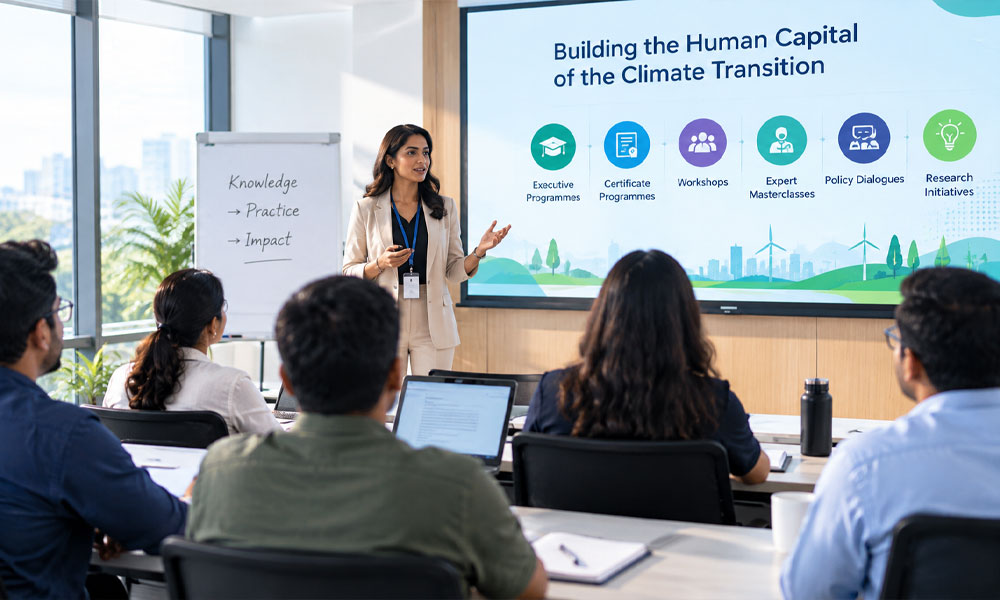
Building the Human Capital of the Climate Transition
No transition can succeed without people equipped to understand it. CLA develops programmes that bring together practitioners, academics, policymakers and industry experts to build practical knowledge and professional capability.
Areas include: Executive programmes; Certificate programmes; Professional training; Workshops; Expert masterclasses; Policy dialogues; Roundtables; Webinars; Academic programmes; Research initiatives; Knowledge resources.
Build Your Climate Capability With CLA